What pseudofolliculitis barbae is and who tends to get it
If shaving leaves tender bumps along your jaw and neck, you are far from alone, and you may be wondering about laser hair removal for razor bumps. Before you book anything, it helps to understand what causes the bumps and which fixes dermatologists suggest first. Laser can be part of the answer, but it is rarely the only step.
The American Academy of Dermatology (AAD) explains that razor bumps, also called shave bumps or barber’s bumps, have a medical name: pseudofolliculitis barbae, or PFB. They form when a razor cuts coarse, curly hairs short and the sharp tips curve back into the skin. The skin reacts to the trapped hair, and inflamed bumps appear.
The AAD says razor bumps are especially common in men with darker skin tones. A 2019 review in Clinical, Cosmetic and Investigational Dermatology links PFB most strongly with tightly curled hair. It notes that women can get it too, most often on the chin, particularly with excess hair growth related to PCOS, and in other shaved areas such as the bikini line and underarms.
Shaving changes dermatologists recommend first
The simplest fix is to stop shaving. The AAD says growing a beard lets trapped hairs grow out so the skin can heal. New bumps may still appear for a while, but you can expect fewer within about a month and none after about three months. If a beard does not suit your job or your style, the next step is changing how you shave.
The AAD’s advice includes washing with a gentle cleanser and softening the beard with warm water or a warm compress, using a moisturizing shaving cream and never dry shaving, and choosing a sharp single-blade or electric razor. Shave slowly in the direction the hair grows, with light pressure and no more than two passes, then use a cool compress. Avoid pulling your skin taut, and never pluck a hair from inside a bump.
Medical treatment matters too. A 2023 review in Clinical and Experimental Dermatology describes topical therapies as the current mainstay of PFB treatment, alongside preventive measures. Depending on how inflamed your skin is, a dermatologist may consider options such as antibiotics, corticosteroids or exfoliating agents called keratolytics.
Where laser hair removal for razor bumps fits, and what the research says
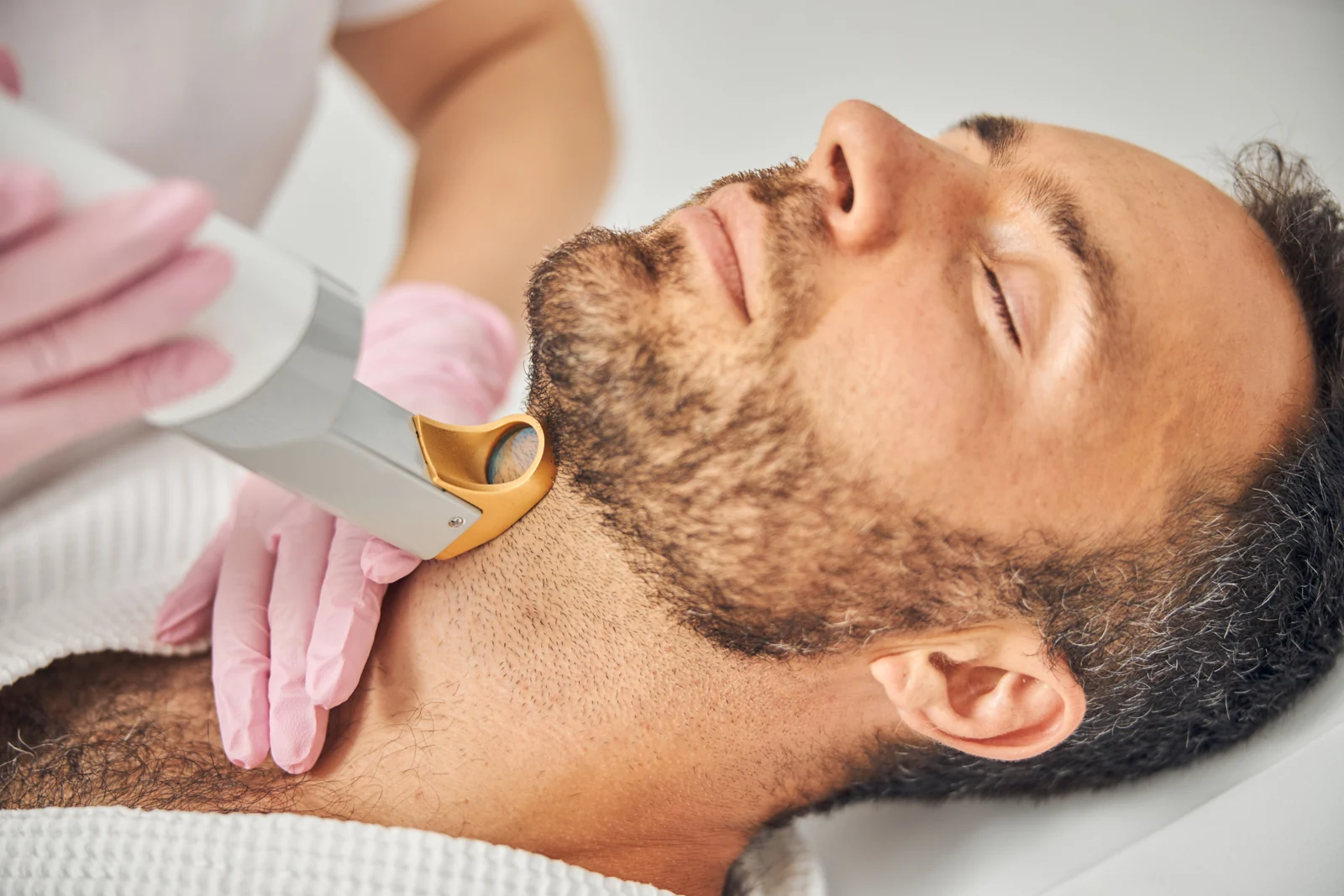
Laser targets the cause rather than the bumps themselves. With less hair growing from the follicles, there are fewer hairs to curl back into the skin. The 2019 review describes laser heat damaging the hair bulb and thinning or destroying hair shafts, which it says reduces the risk of PFB.
The evidence is promising but not final. The 2023 review calls laser hair removal a potential long-term treatment option and says more studies are needed to understand its long-term effectiveness and permanence. The 2019 review reports that three to seven sessions are usually needed for optimal results, and lists pain, redness, scabbing and scarring as possible side effects.
In practice, that means laser is best seen as one tool in a plan rather than a cure. Lasers are FDA-cleared for permanent hair reduction, which means fewer hairs over time rather than every hair gone. You may still need good shaving habits, and a dermatologist may still treat inflammation while laser gradually reduces the hair.
Why wavelength choice matters for darker skin
Laser light is absorbed by melanin, the pigment in hair. Skin has melanin too, and darker skin has more of it, so the laser has to reach the hair without overheating the surface. The 2019 review names long-pulsed Nd:YAG lasers, diode lasers and the 755 nm alexandrite laser among those it found particularly effective for PFB in dark skin.
Our Candela GentleMax Pro includes both a 1064 nm Nd:YAG laser and a 755 nm Alexandrite laser. Nd:YAG stands for neodymium-doped yttrium aluminum garnet, the crystal that produces the light. Its longer wavelength is absorbed less by pigment at the skin’s surface and reaches deeper, which is why it often comes up for darker skin. The device also sprays a cryogen cooling burst onto the skin before each pulse.
PFB itself carries specific risks in darker skin. The 2019 review describes post-inflammatory hyperpigmentation, meaning dark marks left behind after inflammation, as a common complication in darker skin, and notes that keloids, which are thick raised scars, can develop. Tell your provider about any history of keloids or lingering dark marks before treatment starts.
When to see a dermatologist: scarring, infection, keloids
The AAD advises seeing a dermatologist if bumps continue after you change how you shave. Left untreated, repeated razor bumps can leave permanent deep grooves and raised scars on the face. A dermatologist can prescribe treatment for inflammation and help you decide whether laser makes sense for you.
Get medical care first if bumps are filled with pus, very painful or spreading, if you have raised or growing scars, or if dark marks are not fading. Laser hair removal is not a treatment for infection or keloids, and inflamed or infected skin should be assessed by a doctor before any laser session. Once your skin is calm, dermatologist care and laser can work side by side.
If you are a woman with bumps on the chin or neck, mention them to your doctor as well. The 2019 review notes that facial PFB in women is more common with hirsutism, meaning excess coarse hair in a male-type pattern, related to PCOS. Your doctor, OB-GYN or endocrinologist can look at the cause of the extra hair, which can be part of the plan alongside hair removal.
Planning beard-area laser in Great Neck or Commack
If shaving changes and dermatologist care have not been enough, or you would rather reduce beard growth for the long term, a consultation is the place to talk it through. Bring a list of what you have tried, any prescriptions you use on the area, and photos of the bumps at their worst in case your skin is calm on the day.
Decide how much of the beard you want to treat. Many people focus on the neck and lower jaw where bumps cluster, while others choose the full beard. You can read about our laser hair removal service, our guide to laser hair removal on Long Island and our overview of permanent hair removal options at Feeling Fabulous, which also covers electrolysis for gray or light hairs.
We see clients at 200 Middle Neck Rd in Great Neck, close to Queens, and at 635 Commack Rd in Commack, near Huntington. Both offices are open Sunday through Friday, 9am to 6pm, by appointment, and you receive a personalized quote after an assessment. To get started, book a free consultation or call or text (516) 200-1243.
Questions, answered
What is pseudofolliculitis barbae?
Pseudofolliculitis barbae, or PFB, is the medical name for razor bumps. According to the American Academy of Dermatology, it happens when shaving cuts coarse, curly hairs short and the tips curve back into the skin, which reacts with inflamed bumps. It is especially common in men with darker skin tones, though women can get it too, often on the chin or bikini line.
Can laser hair removal get rid of razor bumps?
Laser can help by reducing the hair that causes the bumps, but it is not a guaranteed cure. A 2023 review in Clinical and Experimental Dermatology calls laser a potential long-term option and says more research is needed on its long-term effectiveness and permanence. Topical treatments remain the mainstay, so laser often works best alongside better shaving habits and dermatologist care.
Is laser safe on darker skin for beard bumps?
It can be an option when the wavelength and settings are chosen carefully. A 2019 review reports that long-pulsed Nd:YAG and diode lasers are among those effective for PFB in dark skin, with possible side effects including pain, redness, scabbing and scarring. Darker skin is also prone to dark marks and keloids from PFB, so share your history with your provider before starting.
Do I need to shave before a laser session if I have bumps?
Follow the instructions your provider gives you. Laser targets the hair inside the follicle, so plucking or waxing beforehand works against treatment, and the American Academy of Dermatology warns never to pluck a hair from a bump. If your bumps are inflamed or infected, tell your provider before the appointment, because irritated skin may need a dermatologist’s care before laser goes ahead.
Will laser remove my whole beard?
Only the areas you choose to treat. Many people with razor bumps focus on the neck and lower jaw, where bumps tend to cluster, and keep the rest of the beard. Because laser aims for long-term hair reduction, decide on the shape you want before starting and begin conservatively. You can always extend the treated area later if you change your mind.
This guide provides general education. Treatment suitability, risks, preparation, and aftercare should be discussed with your provider. Individual results vary.
Further reading
- American Academy of Dermatology: Razor bump remedies for men with darker skin tones ↗
- Clinical and Experimental Dermatology: Review of treatments for pseudofolliculitis barbae (Dalia Y, et al., 2023) ↗
- Clinical, Cosmetic and Investigational Dermatology: Pseudofolliculitis barbae, current treatment options (Ogunbiyi A, 2019) ↗