Why skin tone changes how laser hair removal is planned
If you have brown or Black skin, you may have heard that laser is not for you. That idea is out of date, but the details matter. Laser hair removal for dark skin is possible, and the American Academy of Dermatology (AAD) says it must be performed very carefully. The wavelength, the settings and the pace of treatment all need to account for the pigment in your skin, not just the hair you want gone.
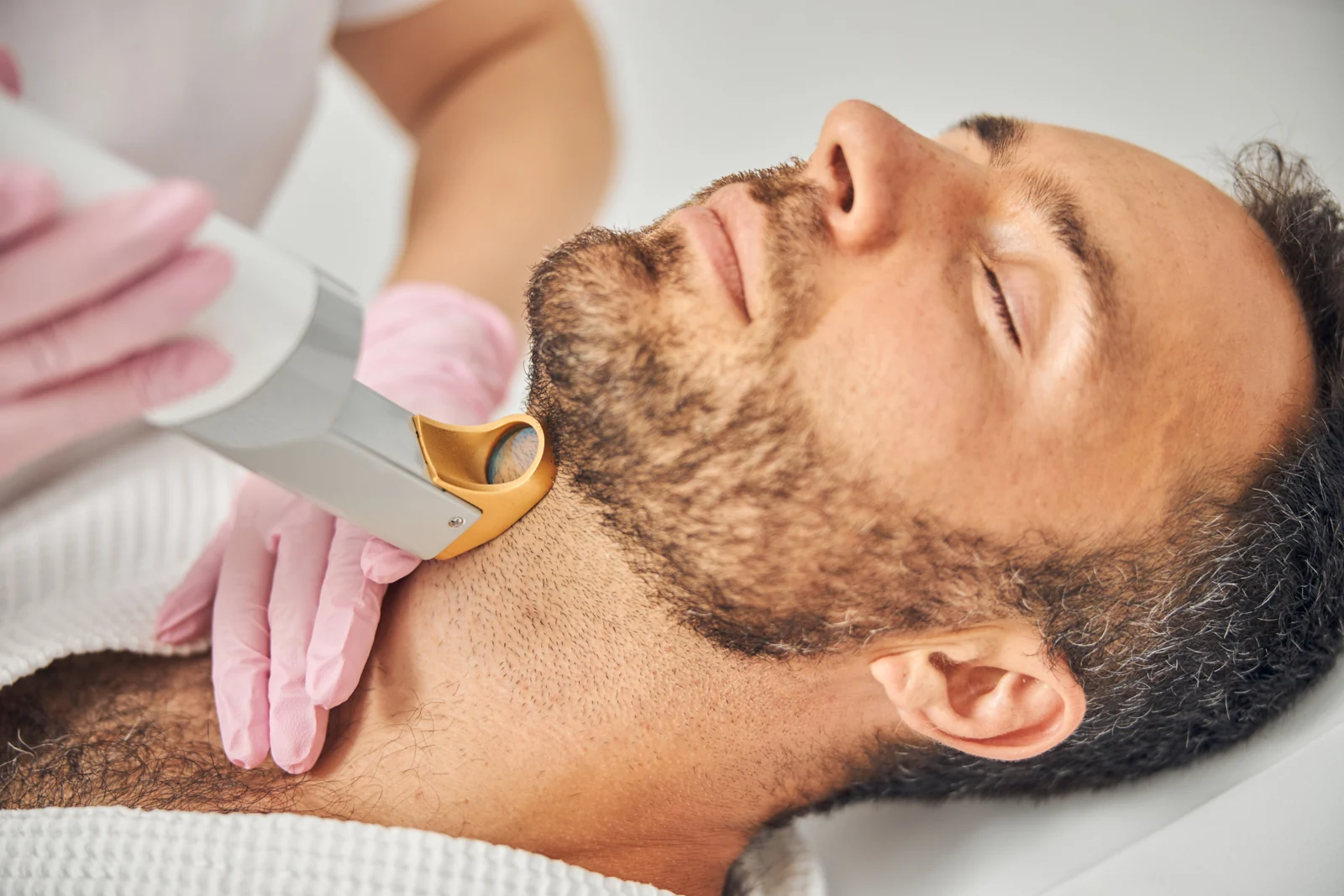
Laser works by sending light into the skin, where it is absorbed by pigment, called melanin, in the hair. The heat damages the follicle so it grows less hair. Skin contains melanin too, and darker skin contains more of it. The skin’s surface can compete with the hair for the laser’s energy, which is why the AAD notes that laser works best on light skin with dark hair.
Providers often describe skin with the Fitzpatrick scale, a six-step classification of how skin reacts to the sun. Type I always burns and never tans. Types V and VI describe deeply pigmented brown and Black skin that rarely or never burns. Your type, along with your hair color and thickness, shapes which wavelength and settings are appropriate for you.
755 nm Alexandrite vs 1064 nm Nd:YAG: what the wavelengths do
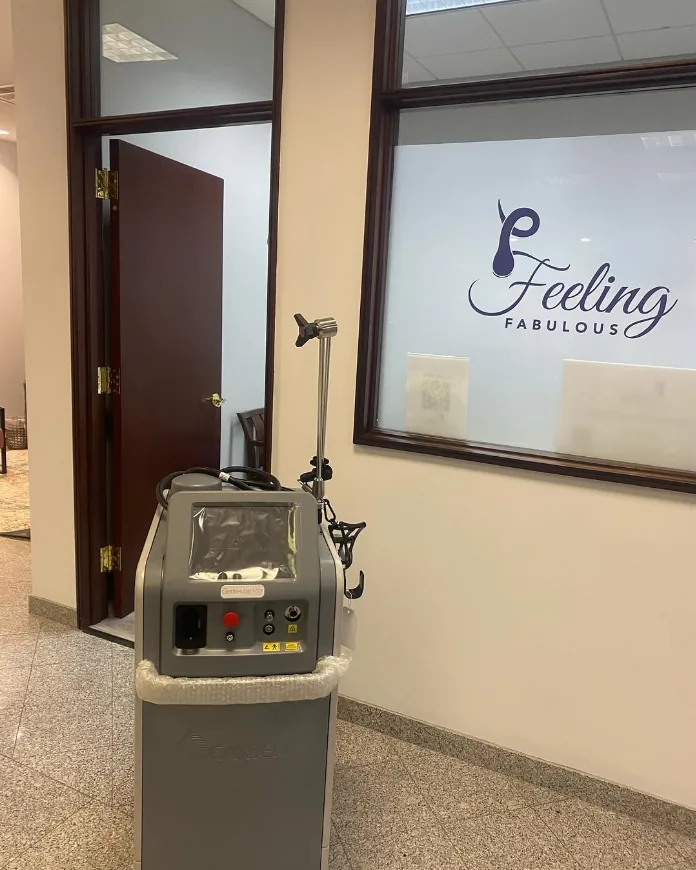
Lasers are named by their wavelength, measured in nanometers (nm). The Candela GentleMax Pro we use at Feeling Fabulous has two: a 755 nm Alexandrite laser and a 1064 nm Nd:YAG laser. Nd:YAG stands for neodymium-doped yttrium aluminum garnet, the crystal that produces the light. Having both in one device means the wavelength can be chosen to suit your skin and hair, rather than the other way around.
The 755 nm Alexandrite wavelength is strongly absorbed by melanin. That makes it efficient on dark hair in lighter skin, but it calls for more caution as skin gets darker. The longer 1064 nm wavelength is absorbed less by the pigment at the skin’s surface and reaches deeper. That is why medical guidance points to long wavelengths like this one, and why Nd:YAG laser hair removal comes up so often in conversations about darker skin.
The GentleMax Pro also sprays a burst of cryogen cooling onto the skin just before each pulse, and it offers spot sizes up to 24 mm. Cooling helps protect the surface while the light works below it. None of this makes any laser automatically right for every person. It gives your provider options to fit the treatment to you.
What medical guidance says about laser hair removal for dark skin
The Endocrine Society’s clinical guideline on hirsutism suggests that women of color who choose laser use a long-wavelength, long-pulse device, such as an Nd:YAG or diode laser, delivered with skin cooling. The authors rate the evidence behind that suggestion as very low quality. That is an honest reminder that research in darker skin is still limited, and that careful, individual planning matters.
The UCSF Gender Affirming Health Program is more specific about wavelength. Its hair removal guideline describes 1064 nm Nd:YAG as the only wavelength considered safe for Fitzpatrick skin types V and VI. It also notes that laser targets dark, coarse hair and is generally ineffective on thin, light, red, blonde or gray hairs.
Guidance also flags people who may be better served by another method. The Endocrine Society advises warning Mediterranean and Middle Eastern women with facial hirsutism, meaning excess coarse hair in a male-type pattern, that they face a higher risk of paradoxical hypertrichosis: more hair growth after laser rather than less. For them it suggests electrolysis or topical treatment instead. Electrolysis treats each follicle with a fine probe and does not depend on hair or skin color.
Preparing darker skin: sun, tanning and medications
Tanned skin holds more pigment, which makes any laser harder to use safely. The AAD advises all laser patients to protect their skin from the sun to avoid side effects, and to keep treated skin out of direct sunlight and away from tanning beds and sun lamps afterward. Ask your provider how long before your session you should avoid sun exposure and sunless tanner, and protect the areas you plan to treat every day.
Bring a complete list of your medicines and supplements to your consultation, including acne treatments and anything you apply to your skin. Some medications make skin more sensitive to light or slower to heal, so your provider needs the full picture. Do not stop a prescribed medicine on your own to prepare for a cosmetic treatment; ask the clinician who prescribed it.
Mention any history of keloids, dark marks after cuts or acne, or cold sores near the treatment area. These details help your provider choose settings and decide whether a test spot makes sense before a full session. If you are unsure whether something is relevant, mention it anyway.
Side effects to watch for, including lightening or darkening
According to the AAD, the most common side effects are discomfort, redness and swelling that usually last one to three days and can look like a mild sunburn. Rarer effects include blistering, cold sore outbreaks, infection, scarring, and skin lightening or darkening. There is generally no real downtime, but you should still follow your aftercare instructions closely.
Pigment changes matter more in darker skin because they are more visible. The AAD says skin color usually returns to normal over time, but some changes are permanent. That is the main reason careful settings, a measured start and clear aftercare instructions are worth more than speed. A provider who moves cautiously in the first sessions is protecting your skin, not wasting your time.
Contact your provider if you notice blistering, crusting, or a patch that turns noticeably lighter or darker than the skin around it. If a reaction is severe, painful or looks infected, see a dermatologist or your doctor promptly rather than waiting for your next laser appointment.
Questions to ask at your consultation in Great Neck or Commack
A good consultation should feel like a two-way assessment. Ask which wavelength would be used for your skin and why, whether your provider has treated your skin tone before, and whether a test spot is recommended. Ask how settings will be adjusted between sessions. You can read about our laser hair removal service and our guide to laser hair removal on Long Island before you come in.
Ask about timing too. The AAD says most patients need two to six treatments, usually four to six weeks apart, and some need maintenance later. Results vary with hair color, thickness, the area and your skin, so treat any estimate as a starting point. If your hair is light or your skin tends to react, ask whether electrolysis fits better; our overview of permanent hair removal options at Feeling Fabulous covers both.
We see clients from across Nassau County at 200 Middle Neck Rd in Great Neck, and from Suffolk County at 635 Commack Rd in Commack, Sunday through Friday by appointment. Your quote is personalized after an assessment. To talk through your skin and hair with us, book a free consultation or call or text (516) 200-1243.
Questions, answered
Is laser hair removal safe for darker skin?
Laser can be an option for darker skin, but the American Academy of Dermatology says it must be performed very carefully in these patients. Medical guidance points to long-wavelength lasers such as 1064 nm Nd:YAG, used with skin cooling. Safety also depends on settings, sun exposure, your medical history and your provider’s experience with your skin tone, so a careful in-person assessment comes first.
Which laser wavelength is used for darker skin tones?
The 1064 nm Nd:YAG wavelength is the one most often recommended. UCSF’s hair removal guideline describes it as the only wavelength considered safe for Fitzpatrick skin types V and VI, and the Endocrine Society suggests long-wavelength, long-pulse lasers with skin cooling for women of color. The final choice depends on your skin, your hair and the area being treated.
How many sessions will I need with darker skin?
There is no fixed number. The American Academy of Dermatology says most patients need two to six treatments, usually four to six weeks apart, with possible maintenance later. Hair color, thickness, the treatment area and how your skin responds all affect the count. Your provider should review progress at each visit and adjust the plan rather than promise a set result.
Can laser cause dark spots or light spots on brown skin?
Yes, it can. The American Academy of Dermatology lists skin lightening and darkening among the less common side effects of laser hair removal. It says skin color usually returns to normal over time, though some changes are permanent. Careful settings, sun protection and following aftercare instructions help lower the risk. Report any color change to your provider, and see a dermatologist if it does not fade.
Do I need to avoid the sun before treatment?
Yes. The American Academy of Dermatology advises all laser patients to protect their skin from the sun to avoid side effects, and to keep treated skin away from direct sun, tanning beds and sun lamps afterward. Tanned skin holds more pigment, which raises the risk for any skin tone. Ask your provider how many weeks of sun avoidance they want before your first session.
This guide provides general education. Treatment suitability, risks, preparation, and aftercare should be discussed with your provider. Individual results vary.