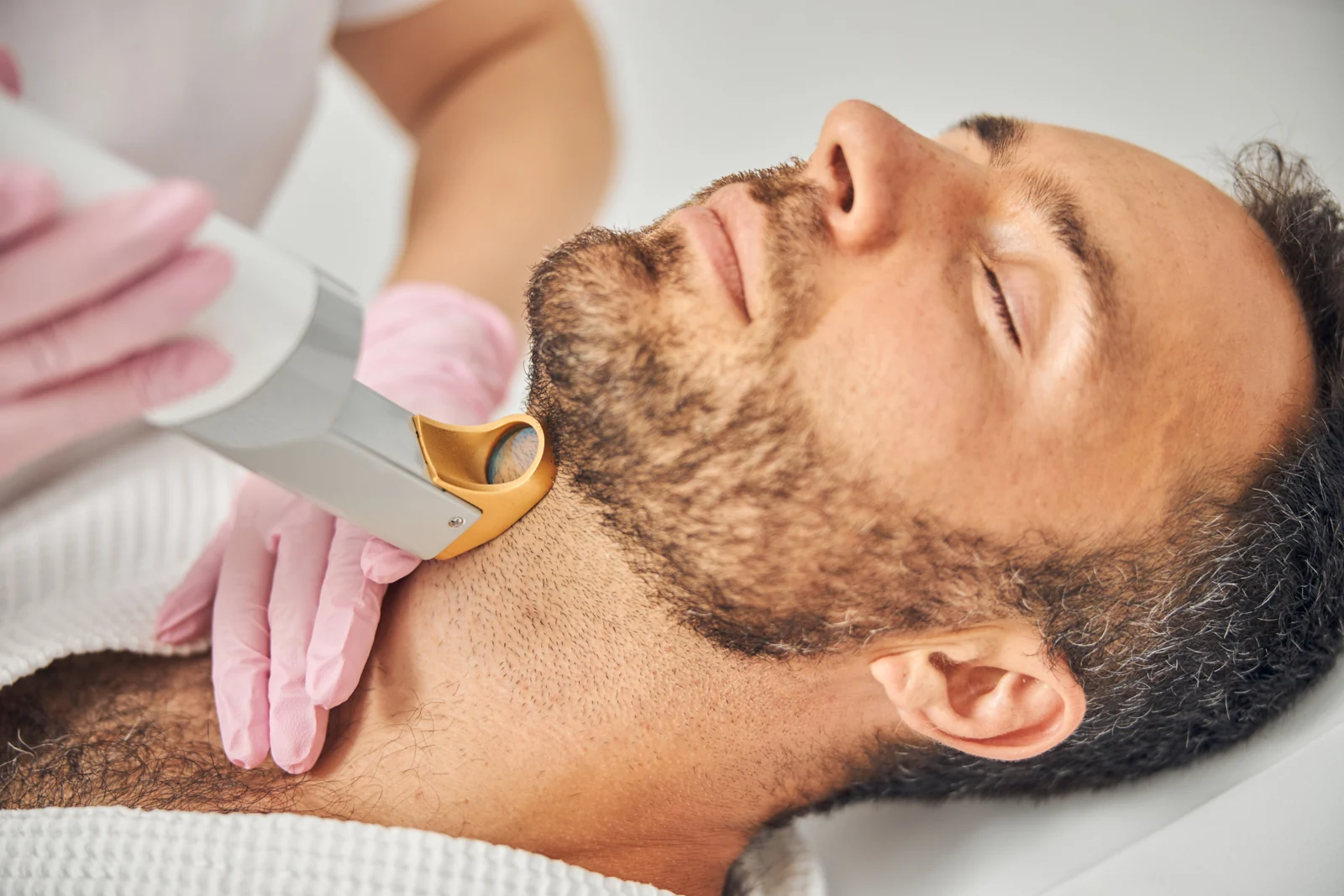
Transgender electrolysis and laser: why many clients combine them
Whether you are a trans woman clearing facial hair, a trans man preparing for surgery or a nonbinary person shaping how you look, hair removal can be a meaningful part of transition. Transgender electrolysis gets a lot of attention because it works on every hair, but many people use laser as well. Knowing what each method does well helps you plan a sequence that fits your hair, your skin and your timeline.
The UCSF Gender Affirming Health Program explains the difference clearly. Laser targets dark, coarse hair because the pigment absorbs its light, and it covers larger areas in less time. Electrolysis, which uses a fine probe to treat one follicle at a time, works on any hair color and skin type, including hairs that laser misses. UCSF notes that combining the two may offer the best result for many people.
Both methods take commitment. UCSF describes laser sessions every four to eight weeks depending on the area, and electrolysis sessions that are typically weekly and can last up to an hour, depending on your comfort. It also cautions that home laser and electrolysis devices have not been shown to work and may cause harm.
Facial hair: how hair color and skin tone shape the plan
If your facial hair is dark, a plan may start with laser to reduce the bulk of the beard, then move to electrolysis for the hairs that remain. Laser thins the volume; electrolysis finishes the hairs laser cannot reach. If much of your facial hair is gray, white, blonde or red, laser is generally ineffective, so electrolysis usually does the work from the start.
Skin tone matters too. UCSF describes 1064 nm Nd:YAG as the only laser wavelength considered safe for Fitzpatrick skin types V and VI, the darkest types on a six-point scale of how skin responds to sun. Our Candela GentleMax Pro has both a 755 nm Alexandrite and a 1064 nm Nd:YAG laser, with a cryogen cooling spray before each pulse, so the wavelength can be matched to your skin.
Facial laser has a specific safety requirement. UCSF states that both eyes must be fully covered during facial treatment to protect against retinal damage. Ask your provider to explain the eye protection before the first pulse. You can read how we approach treatment on our laser hair removal service page.
Hair removal before gender-affirming surgery: follow your surgeon’s protocol
Some surgeries call for hair removal first. UCSF notes that trans women may seek genital hair removal in preparation for vaginoplasty, and trans men may seek hair reduction on the forearm or thigh where a graft for phalloplasty may be taken. The American Electrology Association (AEA) says finishing hair removal before surgery helps prevent future internal ingrown hairs.
Your surgeon sets the requirements. The AEA says your electrologist may ask which surgeon you are working with so treatment can follow that surgeon’s pre-surgical protocol, and it advises allowing sufficient time for hair removal to be completed before the operation. Ask your surgical team for their written requirements, including which areas need clearing and by when, and bring them to your consultation.
Neither UCSF nor the AEA gives a single start date that applies to everyone, so be wary of anyone who promises one. Hair grows in cycles, and a follicle can only be treated once its hair has surfaced, so the total number of visits is hard to predict. Starting early gives you room to finish without rushing.
Why hair has to grow out between visits (and why tweezing works against you)
Electrolysis treats a hair that is visible and still attached to its follicle. The AEA says all the hairs must grow out before they can be permanently removed, which is why an electrologist cannot tell you in advance exactly how many treatments you will need. UCSF adds that both laser and electrolysis work best on hair in the active growth phase, called anagen.
Tweezing and waxing pull hair out of the follicle and leave nothing to treat until it regrows. The AEA also notes that tweezing makes hairs coarser over time and can hide how much hair you actually have. If you need to manage visible growth between appointments, ask your electrologist which approach, such as trimming or shaving, fits your treatment schedule.
Consistency matters. The AEA advises following the treatment schedule your electrologist recommends. Regular visits catch hairs as they surface, and steady progress is easier to track than stop-and-start appointments. If you are combining methods, ask your providers to plan laser and electrolysis visits on the same area so one does not get in the way of the other.
Privacy, comfort and what a consultation covers
Hair removal is personal, and you deserve a provider who treats it that way. The AEA’s guidance on choosing an electrologist says treatments should stay confidential and that an electrologist should not name other clients. You can also ask how your name and pronouns will be recorded and used, and who else will be in the room during treatment.
The AEA suggests confirming that you are getting true needle electrolysis, asking about board certification such as the Certified Professional Electrologist credential, checking for a license where your state requires one, and looking for gloves and sterile, disposable probes or sterilizing equipment such as an autoclave. It is fine to consult more than one electrologist before you choose.
There are several electrolysis methods, including thermolysis (heat), galvanic (a chemical reaction) and blend (both together). Ask at your consultation which method would be used for your hair and why, and how comfort is managed during longer sessions. Dorna, our electrologist, can walk you through what to expect. Our electrolysis service page and our overview of permanent hair removal options at Feeling Fabulous explain how the two methods fit together.
Planning visits between Great Neck and Commack
Weekly electrolysis is easier to keep up when the office is close to home or work. Feeling Fabulous has two offices on Long Island: 200 Middle Neck Rd in Great Neck, in Nassau County near the Queens line, and 635 Commack Rd in Commack, in Suffolk County. Both are open Sunday through Friday, 9am to 6pm, by appointment, and closed Saturday.
Before your first visit, note which areas matter most to you, which hair removal methods you have used recently, and any medicines or skin conditions you have. Avoid tweezing or waxing the areas you plan to treat while you wait, and ask whether your hair should be a particular length for your first electrolysis appointment.
At a free consultation, we look at your hair color, skin and goals, talk through any surgical timeline you are working toward, and give you a personalized quote after the assessment. If you are preparing for surgery, bring your surgeon’s protocol with you. To start planning, book a free consultation or call or text (516) 200-1243.
Questions, answered
Should I start with laser or electrolysis for facial hair?
It depends on your hair and skin. UCSF’s hair removal guideline says laser suits dark, coarse hair, while electrolysis works on all hair colors and skin types, and combining them may give the best result for many people. If your facial hair is dark, laser is often used first to reduce the volume, with electrolysis for what remains. Gray, white, blonde or red hair usually calls for electrolysis from the start.
How far ahead of surgery should I start hair removal?
There is no single answer, so ask your surgeon. The American Electrology Association advises allowing sufficient time for hair removal to be completed before surgery and following your surgeon’s pre-surgical protocol. Because hair grows in cycles and every hair must grow out before it can be treated, the number of sessions is hard to predict. Starting as early as your surgical team allows gives you the most room.
Can I tweeze or wax between electrolysis sessions?
It is best to avoid it. Tweezing and waxing remove hair from the follicle, so there is nothing to treat until it grows back. The American Electrology Association also notes that tweezing makes hairs coarser over time and can hide how much hair you really have. Ask your electrologist what to do instead, such as trimming or shaving, to manage growth between visits.
Does laser work on gray or blonde facial hair?
Generally, no. Laser relies on pigment in the hair to absorb its light, and UCSF’s hair removal guideline describes it as generally ineffective on thin, light, red, blonde or gray hairs. Electrolysis treats each follicle directly and works on any hair color, so it is the usual choice for light or gray facial hair. Many people use laser for dark hairs and electrolysis for the rest.
Is electrolysis permanent?
Electrolysis permanently removes the follicles it successfully treats, and the American Electrology Association describes needle electrolysis as a permanent method. Because hair grows in cycles, it takes a series of sessions to reach every follicle; hairs that were dormant during earlier visits surface later and need their own treatment. Your electrologist can explain what progress usually looks like for your hair at a consultation.
This guide provides general education. Treatment suitability, risks, preparation, and aftercare should be discussed with your provider. Individual results vary.