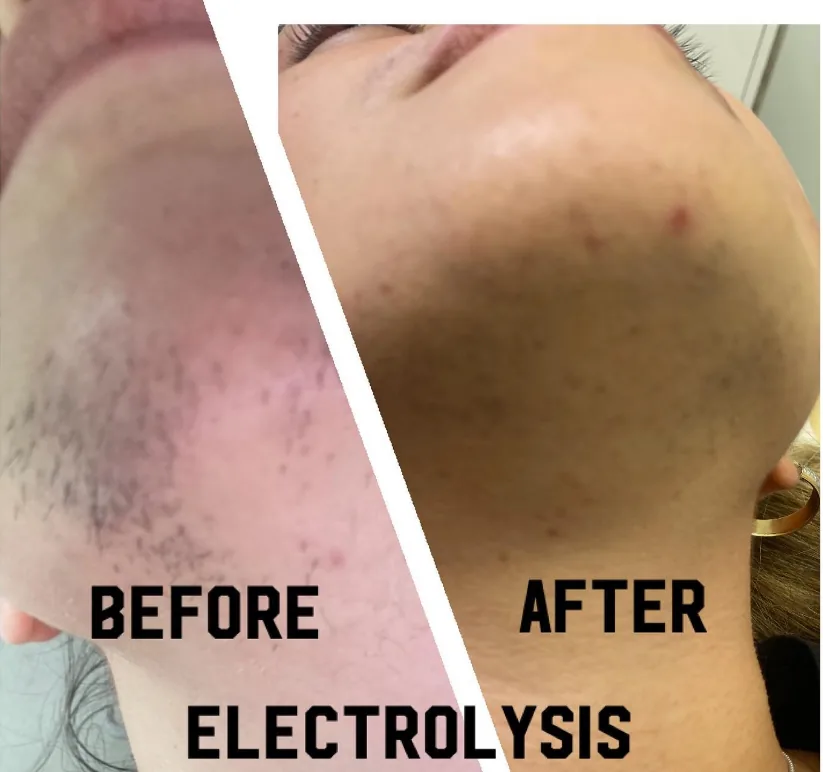
What your skin may look like right after a session
Electrolysis aftercare is simple, but the first day matters. During a session, a fine probe is placed into each hair follicle and a small amount of energy destroys the cells that grow the hair, so that follicle should not grow it back. Because the work happens one follicle at a time, the skin in a small area has been treated many times over, and it may show it for a little while.
Redness after electrolysis is the first thing you may notice. The American Electrology Association describes slight redness or tenderness that usually disappears within a couple of hours, and Cleveland Clinic calls the reddening that can appear during or right after treatment very short-lived. How much you see depends on the area, how many hairs were treated and your own skin.
If you are new to electrolysis, ask before you leave what is typical for your skin and the area treated, whether that is the chin, upper lip or brows. Knowing what normal looks like for you makes it much easier to judge later whether anything needs a call. You can read more about our electrolysis services before your next visit.
Electrolysis aftercare for the first 24 hours: sweat, sun and makeup
If you are wondering what to do after electrolysis, the first day is mostly about what to skip. Both the American Electrology Association and Cleveland Clinic give the same short list for the first 24 hours: avoid activities that can irritate freshly treated follicles. That means heavy sweating, tanning, long stretches in the sun and putting makeup on the treated area. It is a brief window, and planning your appointment around it is most of the work.
Can you work out after electrolysis? A workout that leaves you sweating is exactly what both sources suggest avoiding for a day, and the same logic applies to hot yoga, saunas and steam rooms. If exercise is part of your routine, book sessions for a rest day, or train earlier in the day before your appointment rather than after it.
For facial treatment, the rule on makeup after electrolysis shapes your schedule. If you need full makeup for work or an event, book electrolysis for a day when bare skin is easy, such as a late-afternoon slot before a quiet evening. For sun after electrolysis, stay indoors or in the shade where you can, and wear a wide-brimmed hat outdoors. Ask your electrologist whether and when to use sunscreen on treated skin.
Keeping the area clean and hands-off
Cleveland Clinic notes a very slight risk of infection, which it links to unsterile needles, and of scarring if electrolysis is not done correctly. It also says these risks are very low when you choose a certified, professional practice. Your part after the appointment is simpler: keep the area clean and leave it alone while it settles.
Wash your hands before touching your face, and resist the urge to scratch, rub or pick at treated skin. Use a clean towel and pillowcase that night. Hold off on scrubs, peels and new skin-care products on the area until you have checked with your electrologist, and if they recommend a soothing product, use that rather than experimenting with something new.
Dark spots after electrolysis: patience, not bleach
If you have darker skin, often described as Fitzpatrick types IV to VI, you may notice small, temporary dark spots where hairs were treated. The Fitzpatrick scale is a six-type system that describes how skin responds to the sun. Cleveland Clinic says these spots fade over time and specifically advises against using bleaching cream on them.
Temporary marks can feel frustrating when the goal is clearer skin, but the advice is to let them fade rather than bleach them, and picking or scrubbing only adds irritation. Follow the first-day sun advice, and ask your electrologist how to protect the area after that. The American Electrology Association says electrolysis works regardless of skin color or hair type, so temporary spots are not a sign the method is wrong for you.
If spots do not seem to be fading, or they bother you, mention them at your next appointment. Your electrologist can look at how your skin is responding over the course of treatment, and a dermatologist can assess any pigment change that worries you or does not improve.
Between appointments: why not to tweeze or wax
Tweezing between electrolysis sessions is tempting, especially when a few chin hairs show up before your next visit. The American Electrology Association notes that chin hair in women is often made worse by tweezing and waxing, and it describes repeated irritation from pulling hairs as one cause of larger or ingrown hairs.
There is a practical reason too. Electrolysis treats the hairs your electrologist can see, so pulling them out before an appointment leaves fewer to treat that day. Ask how to manage regrowth between visits; trimming or shaving may be fine for you, but get advice that fits your own plan.
Consistency matters as much as restraint. Cleveland Clinic says appointments are typically every week or every other week and can continue for up to a year and a half, and the American Electrology Association says most people who follow their recommended plan are done or nearly done within 18 months. Learn more about electrolysis on Long Island, including facial hair and hair of every color.
When to contact your electrologist or a doctor
Use the expected pattern as your yardstick: redness or tenderness that fades within hours. Contact your electrologist if redness lasts much longer than you were told to expect, if the area becomes more tender instead of less, or if you notice anything you were not told about, including dark spots that concern you.
Contact a doctor promptly if the skin becomes very painful, hot or swollen, if you see pus, or if you develop a fever or feel unwell. Cleveland Clinic describes infection after electrolysis as a very slight risk, but these signs need medical attention rather than waiting for your next electrolysis appointment.
Talk to a doctor about new or increasing hair growth, too. The American Electrology Association notes that electrologists cannot diagnose, although they do recognize what is not normal. If hair is appearing in new places, or you suspect a hormonal cause such as PCOS, see your doctor or an endocrinologist alongside your electrolysis plan.
Scheduling follow-ups in Great Neck or Commack
A little planning makes aftercare easy. When you book, look at the 24 hours after the appointment and avoid a day with a hard workout, a beach plan or an event that needs makeup. Feeling Fabulous sees clients Sunday through Friday, 9am to 6pm, by appointment, and is closed on Saturday, so a Sunday or late-afternoon visit can leave the rest of your day free.
Our two offices are at 200 Middle Neck Rd in Great Neck, close to Manhasset and the rest of the North Shore of Nassau, and at 635 Commack Rd in Commack for Suffolk County. See the full list of areas we serve across Long Island, or call or text (516) 200-1243 to arrange your next session.
New to electrolysis? Book a free consultation with Dorna. She can look at your hair and skin, explain the aftercare that suits your treatment area, and give you a personalized quote after the assessment. Ask her which electrolysis method she would use for you, too.
Questions, answered
How long does redness last after electrolysis?
For most people, not long. The American Electrology Association says slight redness or tenderness usually disappears within a couple of hours, and Cleveland Clinic describes it as very short-lived. How much you see depends on your skin and the area treated. If redness lasts much longer than your electrologist told you to expect, or gets worse instead of better, contact them.
Can I wear makeup after electrolysis?
Both the American Electrology Association and Cleveland Clinic advise skipping makeup on the treated area for the first 24 hours, because it can irritate freshly treated follicles. If you need makeup for work or an event, schedule your session so the following day can be a bare-skin day. After 24 hours, follow any extra guidance your electrologist gives you.
Can I work out after electrolysis?
It is best to wait a day. Both sources recommend avoiding anything that causes heavy sweating for the first 24 hours after treatment, since sweating can irritate treated follicles. That includes hard workouts, hot yoga, saunas and steam rooms. If exercise matters to your routine, train before your appointment or book electrolysis on a rest day.
What should I do about dark spots after treatment?
Give them time. Cleveland Clinic notes that people with darker skin may get temporary dark spots after electrolysis, that the spots fade over time, and that bleaching cream should not be used on them. Avoid picking or scrubbing the area, follow the first-day sun advice, and mention the spots at your next visit if they are not fading.
When should I call my electrologist?
Call if redness or tenderness lasts well beyond a few hours, gets worse instead of better, or you notice anything you were not told to expect. If the area becomes very painful, hot or swollen, shows pus, or you develop a fever, contact a doctor promptly as well. Feeling Fabulous clients can call or text (516) 200-1243.
This guide provides general education. Treatment suitability, risks, preparation, and aftercare should be discussed with your provider. Individual results vary.