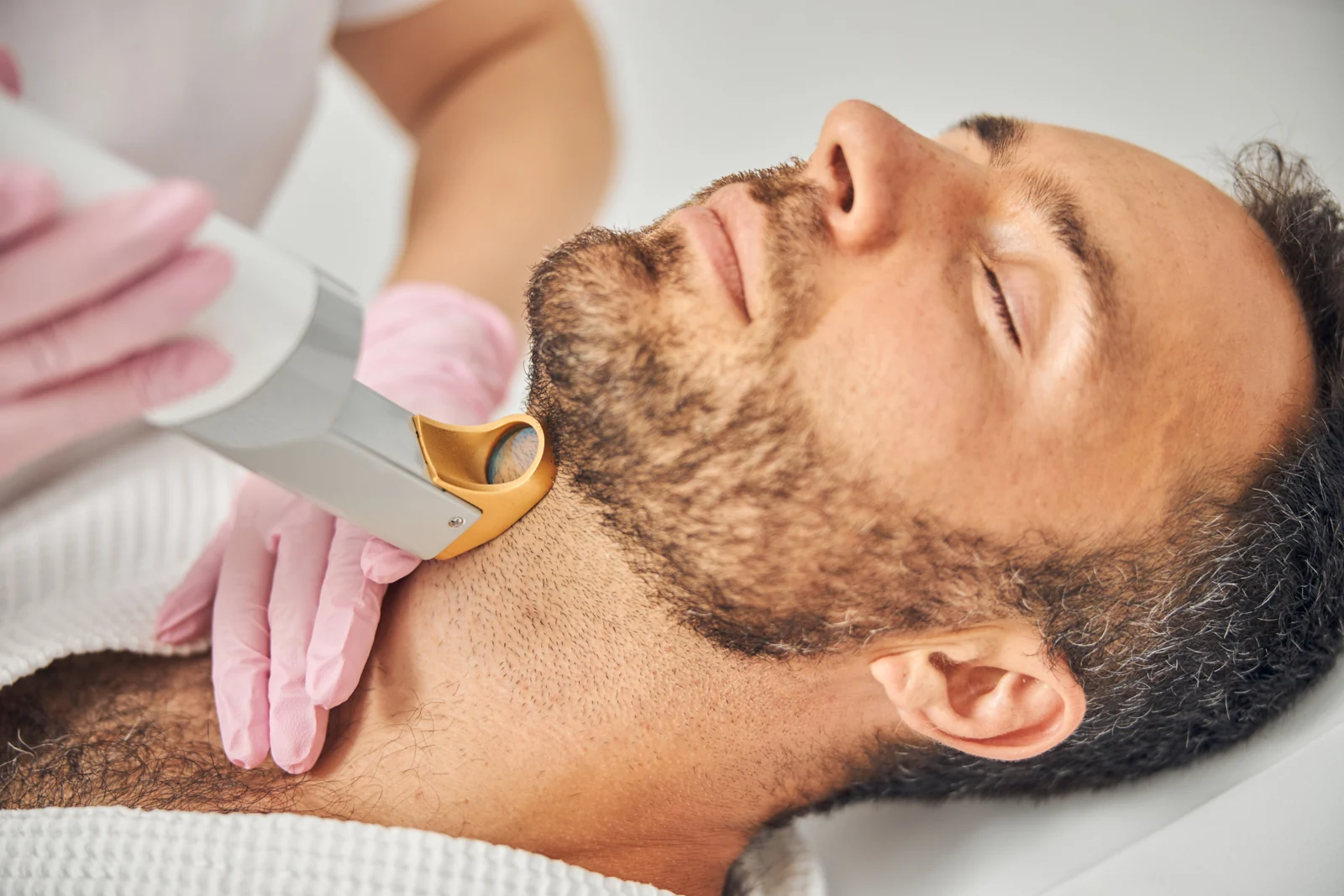
Does laser hair removal hurt? What laser feels like
Does laser hair removal hurt? It can, briefly, and how much depends on you and the area being treated. The American Academy of Dermatology (AAD) says in its laser hair removal FAQs that many patients describe the pulses as feeling like warm pinpricks or a rubber band being snapped against the skin.
Cleveland Clinic says it might feel like a series of stings, and that some people compare it to a rubber band snapping against their skin. It also notes a session might take a few minutes or up to an hour, depending on the area, so a small area is over quickly while a larger one simply means more pulses.
At Feeling Fabulous, laser hair removal is done with the Candela GentleMax Pro, which sprays a burst of cryogen cooling onto the skin just before each laser pulse. That cooling is part of every pulse, though you’ll still feel the laser. Your provider can explain what to expect for your skin and the area you’re treating.
Does electrolysis hurt? What it feels like
Electrolysis works differently. A very fine probe is placed into one follicle at a time, and a small current destroys that hair’s growth cells. The American Electrology Association (AEA) says you’ll likely feel a momentary heat sensation or pinch, and that you shouldn’t feel the probe going in.
The AEA adds that discomfort is minimal for most people, but that individual tolerances vary greatly. Because hairs are treated one by one, appointments are more focused: the AEA says a visit can run from a few minutes for a follow-up to about an hour for a larger area.
So, laser vs electrolysis pain: which is worse? There’s no simple ranking. Laser covers an area with quick pulses, while electrolysis delivers a brief sensation at each follicle over a longer appointment. Some people tolerate one more easily than the other. Our guide to permanent hair removal with laser vs electrolysis explains which method suits which hair.
Why some areas feel more sensitive than others
People often ask about laser hair removal pain by area, but the honest answer is that sensitivity varies by area and by person. The AEA’s comparison of hair removal methods says electrolysis comfort varies by client sensitivity, and it notes that laser can be painful for some people too.
You might find your upper lip feels different from your legs, or your bikini line feels different from your underarms. The sources we cite don’t rank body areas by pain, so be wary of any chart that does, and of anyone who promises a pain-free session.
Brazilian laser hair removal pain is a common worry for first-timers. What helps most is communication. Tell your provider how you’re doing as you go, ask for a short pause if you need one, and mention any area where waxing or shaving has irritated your skin before.
Comfort steps: cooling, shaving correctly and timing
Laser hair removal cooling happens before and after. During treatment, our GentleMax Pro sprays cryogen onto the skin just before each pulse. Afterward, Cleveland Clinic says your skin might be red, swollen and a little painful, and that you can use a cold compress on the treated area.
Shaving correctly matters too. Cleveland Clinic advises shaving the area two to three days before laser treatment, and avoiding waxing, tweezing and plucking in treated areas once treatment begins. For electrolysis, ask your electrologist how long to let hair grow before a visit, since a hair needs to be there to be treated.
Then there’s timing. Cleveland Clinic advises staying out of the sun as much as possible before treatment and keeping treated skin out of natural and artificial sunlight. For electrolysis, the AEA lists relaxation and hydration among the ways to increase comfort. Book a time when you won’t feel rushed, so you can settle in.
Topical numbing: ask your provider first
Numbing cream before laser hair removal or electrolysis is a question to ask, not a step to take on your own. The AEA lists topical anesthetics among the ways comfort can be increased during electrolysis, along with relaxation, hydration and adjustments to treatment settings.
Whether a numbing product suits you depends on the product, how much skin it would cover, the area and your health history. Check with your provider, and with your own doctor if you have a medical condition, before applying anything, and follow their directions on which product to use, how much and when.
Mention medications, skin conditions, pregnancy and any past reactions to creams or treatments at your consultation. That helps your provider recommend comfort options that suit you. If numbing isn’t right for you, cooling, pacing and short breaks can still make a session more manageable.
What’s normal afterward, and what isn’t
After laser, the AAD says the most common side effects are minor and last 1 to 3 days. Redness and swelling often look like a mild sunburn. Cleveland Clinic notes the skin may be red, swollen and a little painful, and that you should be able to go back to normal activities right away.
After electrolysis, the AEA says you may have slight redness or tenderness that usually disappears in a couple of hours. For the first 24 hours, it advises avoiding things that can irritate the follicles, such as excessive sweating, tanning, prolonged sun exposure and applying makeup.
Some reactions aren’t routine. The AAD lists rarer laser side effects including blistering, cold sores, infection, scarring and changes in skin color, and Cleveland Clinic also lists burns. If you notice blisters, crusting, spreading redness, worsening pain or signs of infection, contact your provider promptly, and seek medical care if symptoms are severe.
Questions to bring to a free consultation in Great Neck or Commack
A consultation is the time to talk about comfort before anything starts. Useful questions include: How is this area likely to feel for me? What comfort options do you use, and which would you suggest for my skin? Can we take breaks? What should I avoid before and after?
Ask about the method, too. For electrolysis, ask which modality the electrologist plans to use, thermolysis, galvanic or blend, and why. For laser, ask how settings are chosen for your skin and hair. You can read about our electrolysis for permanent hair removal before you come in.
We’re at 200 Middle Neck Rd in Great Neck and 635 Commack Rd in Commack, open Sunday through Friday, 9am to 6pm, by appointment, for clients across Long Island. Book a free consultation or call or text (516) 200-1243, and bring your comfort questions with you.
Questions, answered
Does laser hair removal hurt?
It can, briefly. The American Academy of Dermatology says many patients describe laser pulses as warm pinpricks or a rubber band snapped against the skin, and Cleveland Clinic describes a series of stings. How it feels varies by person and area. Cooling before each pulse and a cold compress afterward can help, and you can ask your provider about other comfort options.
Is electrolysis more painful than laser?
There’s no simple answer. The American Electrology Association says electrolysis usually feels like a momentary heat sensation or pinch, and that tolerance varies greatly from person to person. Laser feels more like quick stings across an area. Some people find one easier than the other, so talk through your concerns at a consultation before choosing a method.
Can I use numbing cream before treatment?
Ask your provider first. The American Electrology Association lists topical anesthetics among the ways to increase comfort during electrolysis, but whether a numbing product suits you depends on the product, the size of the area and your health history. Don’t choose a product or timing on your own; follow your provider’s and your doctor’s directions.
Which areas are most sensitive?
Sensitivity varies by area and by person, and the sources we cite don’t rank body areas by pain. Your upper lip may feel different from your legs, and a bikini area may feel different from your underarms. Tell your provider how you’re doing during a session so pacing and comfort steps can be adjusted for you.
How long does discomfort last after a session?
After laser, the American Academy of Dermatology says common side effects such as redness and swelling are minor and last 1 to 3 days. After electrolysis, the American Electrology Association says slight redness or tenderness usually disappears in a couple of hours. Contact your provider if you notice blisters, worsening pain or signs of infection.
This guide provides general education. Treatment suitability, risks, preparation, and aftercare should be discussed with your provider. Individual results vary.